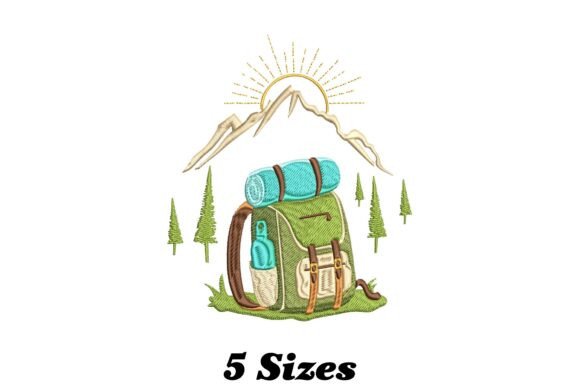
Hiking Backpack Embroidery Design Review
As an experienced embroidery designer, I spend my days evaluating digital files not just for their aesthetic appeal, but for their viability in commercial production. When a small business owner or Etsy seller looks to expand their small business merch line, the choice of design is critical. It must translate well from screen to fabric, withstand the rigors of washing, and elevate the perceived value of the final product. Today, I am reviewing the Hiking Backpack machine embroidery design. While the product description suggests it can embellish t-shirts, towels, and home decor with a "vibrant and imaginative flair," we need to dig deeper into its practical application for branded merchandise, patches, and uniform accents.
First Impressions and Visual Personality
The title Hiking Backpack immediately evokes themes of adventure, exploration, and outdoor lifestyle. In the context of the provided description, which promises a stylish update and imaginative flair, this design likely leans towards a modern, perhaps slightly rustic or playful aesthetic. For a creative studio, a local bakery, or a handmade pet brand, this visual personality offers a versatile foundation. It is not overly ornate or elegant in a traditional sense; rather, it feels approachable and bold.
From a branding perspective, this design works exceptionally well for businesses that want to project a sense of journey, discovery, or community. It fits naturally within the Camping niche, but its broader appeal allows it to serve as a unique logo accent for urban boutiques or craft fairs. The "delightful" nature mentioned in the description suggests it avoids being too corporate, making it ideal for handmade products where warmth and authenticity are key selling points.
Real-World Business Applications
When evaluating a digital embroidery file for commercial use, I look at how it performs across various touchpoints. Here is how the Hiking Backpack design translates to real-world scenarios:
- Embroidered Patches: This design has strong potential as a detachable patch. Small businesses often use these on denim jackets, tote bags, or laptop sleeves to create a cult following. The backpack motif is universally understood, making it an excellent conversation starter for customers.
- Staff Uniforms and Aprons: For a café or a boutique, placing this design on the left chest of a work shirt or as a pocket accent on an apron embroidery project adds a touch of personality without overwhelming the staff member. It signals that the brand values creativity and experience.
- Cap Embroidery: A classic application for any outdoor or lifestyle brand. The backpack iconography fits perfectly on the front panel of a cap, serving as a subtle brand marker for custom apparel lines.
- Tote Bag Design: Canvas totes are a staple for Etsy sellers and crafters. Using this machine embroidery design on a sturdy canvas bag elevates it from a simple giveaway item to a premium product that customers will actually want to keep and use.
- Product Packaging Accents: Consider stitching a small version of this design onto hang tags or labels attached to your physical products. This attention to detail significantly boosts brand identity and customer trust.
Brand Identity and Customer Trust
In the crowded marketplace of online crafts and local goods, visual consistency is paramount. The Hiking Backpack design contributes to a cohesive narrative. If your brand story involves travel, craftsmanship, or outdoor living, this design reinforces that message. When a customer sees high-quality embroidery on your merchandise, it subconsciously signals quality control and professionalism. It moves the perception of your item from "mass-produced" to "crafted with care."
Furthermore, using a distinct design like this helps with design assets recognition. Over time, customers may begin to associate the backpack motif specifically with your brand, increasing recall and engagement. It transforms a simple t-shirt or towel into a piece of wearable brand advocacy.
Strategic Placement and Limitations
No design is perfect for every surface. As a designer, I must advise caution in specific applications to ensure the integrity of the finished product.
Small Patch Sizes: If you plan to digitize this into a very small patch (under 2 inches), be mindful of the detail level. Fine lines may merge together, losing the definition of the backpack straps or zippers. Always test at the intended final size.
Curved Surfaces: Applying this to the front of a baseball cap requires precise hooping and tension adjustment. Curved surfaces can distort straight lines, so ensure your digitizing software accounts for the curvature of the hat crown.
Dark Uniforms and Fabric Texture: If embroidering on dark fabrics, thread color contrast is vital. A light-colored backpack design might get lost on black denim unless you use a substantial underlay or a contrasting thread palette. Similarly, highly textured fabrics like heavy wool or rough burlap can obscure fine details, making the design appear muddy.
Frequent Washing: For items like aprons or work shirts that undergo frequent laundering, check the stitch density. High-density areas can become stiff and uncomfortable if not stabilized correctly. Ensure the backing material is appropriate for the fabric type to prevent puckering after multiple wash cycles.
Practical Designer Notes for Production
Before committing to a large run of commercial embroidery projects, follow these essential steps to protect your investment:
- Test in Black and White: Convert the design to monochrome to check the balance of positive and negative space. If the design relies too heavily on thin lines, it may not hold up well in stitch form.
- Check Hoop Size: Verify that the hoop size required by the file fits comfortably on your target garment. You do not want to discover mid-production that the design is too wide for your standard 6x10 hoop.
- Review Thread Color Contrast: Select thread colors that pop against your specific fabric. Use a printable mockup to visualize how different thread combinations look on your actual materials before running the machine.
- Inspect Spacing and Density: Look closely at the digitizing for proper spacing between elements. Crowded stitches can lead to needle breaks and poor finish quality.
- Stabilizer Selection: Choose the right stabilizer for your fabric. Cut-away stabilizers are generally best for stretchy knits or frequently washed items, while tear-away may suffice for stable wovens like towels.
- Confirm Commercial Licensing: Most importantly, verify that you have the correct license to sell items made with this embroidery file. Personal use licenses do not cover commercial merchandise sales.
Final Verdict
The Hiking Backpack embroidery design is a solid asset for small business owners looking to add a touch of wanderlust and style to their merchandise. Its versatility allows it to function effectively as a branded patch, a subtle logo on caps, or a focal point on tote bags. By paying attention to placement, fabric choice, and proper stabilization, you can leverage this design to enhance your brand identity and deliver a premium handmade product that resonates with your customers. Just remember to always test before you produce en masse, ensuring that every stitch reflects the quality your business stands for.